Valorant: how to look like a smurf without a second account
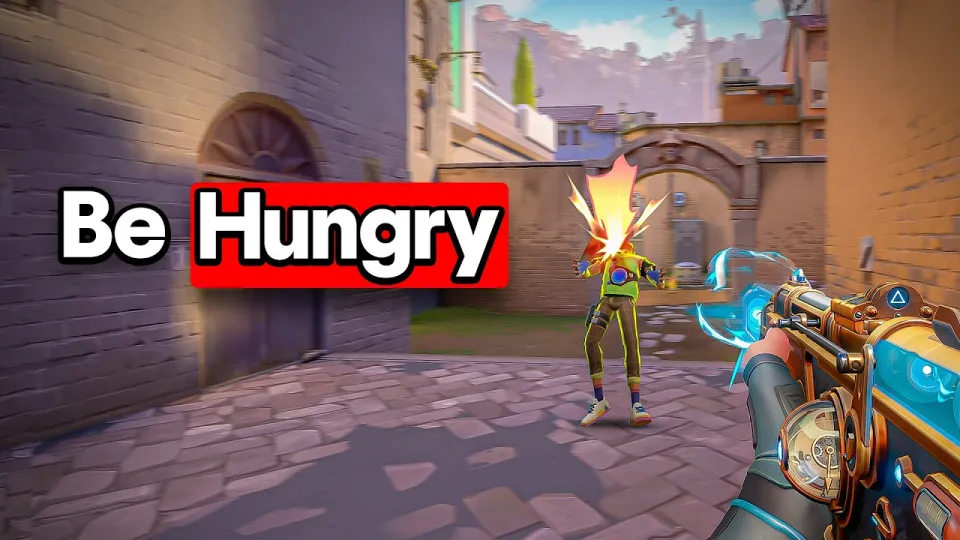
Video: How to Get So Good at Valorant it Feels Like Smurfing
Need articles like this for your video? They help promote it on YouTube and Google — order them in the Telegram bot @sat_sit_bot. It writes articles around your video, embeds the video and publishes them on popular niche websites (no ads). Try it free: 50 articles on us.
· based on the channel Konpeki
Most Valorant players who look like smurfs are not smurfs at all — they simply react faster, hold cleaner angles and move in ways the enemy cannot predict. The gap between a Diamond player and a smurf is rarely about aim speed alone; it is about how early the shot is prepared and how little information the opponent gets before dying. The fastest route to that feeling is structured practice plus a small set of habits, and Konpeki's breakdown of the topic is built around exactly that idea. If you want a coached version of the same path, the Immortal Roadmap Program takes applications through roadmap.gg/v/lUfrMRb74SE, where you book a free call to see whether you fit a slot.
What "looking like a smurf" actually means in Valorant
A smurf looks unbeatable because every duel starts with an advantage the opponent did not notice. That advantage comes from three places: crosshair placement before the peek, reaction time at the moment of contact, and movement that breaks the enemy's aim instead of feeding it. When all three line up, the scoreboard looks like a second account even though it is your main. The practical definition is simple — you win fights before the fight becomes a 50/50 aim contest. Players who grind mechanics but ignore preparation keep losing those same duels and blame their aim, when the real problem is arriving at the angle late and standing still in the open.
Reaction training that transfers to real duels
Reaction time in Valorant is not a raw reflex score, it is the speed at which you convert what you see into a shot. Two habits raise that speed more than any aim trainer: pre-aiming the exact head level of the angle you are about to clear, and keeping your crosshair on the wall edge so that only a small correction is needed when an enemy appears. Drills that help:
- Set up a Range exercise with bots at head level and clear them while strafing, not standing still.
- Use the "movement error" indicator in the Range settings to see how much your shot drifts while moving; some players lower the multiplier to 0.5 to isolate the error and fix it.
- Practice one shot per side: strafe right, fire, strafe left, fire, and keep the rhythm instead of spraying.
- In deathmatch, force yourself to take only fights where your crosshair is already at head level — walk away from anything else.
The point is not to become a flick machine. It is to make the first bullet land before the enemy's brain registers that a duel started.
Movement that makes you hard to hit
The most underrated smurf trait is movement discipline during a fight. Standing still while shooting is correct for accuracy, but standing still while being shot at is a death sentence. The pattern that works: strafe, stop, fire one or two bullets, strafe the other way, fire again. This forces the enemy to keep re-adjusting while your shots stay accurate. Two rules matter more than the pattern itself — never strafe into the open side of an angle, and never re-peek the same spot the same way twice. If you died to a player holding an angle, the next peek should come from a different distance, a different height, or after a teammate's utility forces them to move. Predictable movement is what makes average players look average.
Unpredictability is the real smurf skill
Smurfs win the mental game before the aim duel: the enemy cannot build a model of what you will do next. Rotate timings, lurk paths, utility usage and even your economy decisions should vary between rounds, because opponents adapt to patterns within two or three rounds. Practical ways to stay unpredictable: change which site you attack first, vary whether you push with your team or hold a flank, and occasionally play a round from a position nobody expects from your agent. This is also the single most common takeaway players pull from coaching content — reacting to the enemy instead of running a fixed script is what separates climbing players from stuck ones. Being unpredictable does not mean playing randomly; it means having two or three plans and choosing the one the enemy is least prepared for.
A repeatable weekly routine for climbing
Improvement in Valorant comes from repetition with feedback, not from playing more ranked games on autopilot. A workable week looks like this:
- 15–20 minutes of Range and deathmatch warm-up focused on crosshair placement and strafing shots.
- Two or three ranked games played with one specific goal per session, such as "never peek without pre-aim" or "always trade my duelist."
- One VOD review of your own game, watching only your deaths and asking what information you had before each one.
- One review of a higher-ranked player on your agent, watching where they stand and when they rotate rather than what they aim at.
This structure is what coaching programs like Konpeki's Immortal Roadmap are built around, with the promise of five divisions in ten weeks for players who follow it consistently. The free version of the same material — drills, resources and office hours — lives in the Konpeki Discord at https://www.discord.gg/UnRETVmRpV.
Common questions players ask about smurf-level play
Several recurring doubts come up whenever this topic is discussed. One is whether you need a specific sensitivity or a high-end mouse: you do not, but you do need a sensitivity low enough to hold head level consistently, usually somewhere in the 200–400 eDPI range for most players. Another is whether console players can train the same skills — yes, the reaction and movement principles transfer, though aim drills differ because of controller input. A third is whether age blocks improvement; it does not, though younger players often pick up reaction-based habits faster while older players usually improve faster through game sense and positioning. Finally, many players ask whether they should focus on one agent: sticking to two or three agents you know deeply beats spreading across the roster, because agent mastery frees mental bandwidth for decision-making.
Useful links from the breakdown
- Immortal Roadmap Program application and free call: https://roadmap.gg/v/lUfrMRb74SE
- Konpeki Discord with free coaching resources and office hours: https://www.discord.gg/UnRETVmRpV
- Twitch: https://www.twitch.tv/konpekichan
- Twitter: https://twitter.com/coachpeki
- TikTok: https://www.tiktok.com/@coachpeki
Final thoughts on playing above your rank
Looking like a smurf is a byproduct of preparation, not a secret setting. Faster reactions come from pre-aiming and deliberate drills; harder-to-hit movement comes from strafing with purpose; and the mental edge comes from refusing to repeat the same play twice. None of it requires a second account, and all of it compounds faster than raw aim grinding. Konpeki's breakdown of this topic is a useful starting point because it treats the problem as a set of habits rather than a talent gap. If you want the structured version with accountability, apply for the Immortal Roadmap Program through roadmap.gg/v/lUfrMRb74SE and book the free call.
Key takeaways
- Smurfing is not a mechanic — it is the visible result of faster reactions, cleaner crosshair placement and less predictable movement.
- Core drill: strafe with A and D, fire the moment your movement switches direction, one shot per side, then repeat in the Range.
- Konpeki's coaching program promises 5 divisions in 10 weeks — apply for a free call at https://roadmap.gg/v/lUfrMRb74SE
- Free drills, VOD reviews and office hours live in the Konpeki Discord: https://www.discord.gg/UnRETVmRpV
- Low-sensitivity players can isolate movement errors by setting the movement error multiplier to 0.5 in the Range settings.
Source: How to Get So Good at Valorant it Feels Like Smurfing · Markdown version
Questions & answers
Do I need a second account to play like a smurf in Valorant?
No. The smurf look comes from preparation, crosshair placement and unpredictable movement, all of which you can build on your main account. A second account only hides your rank; it does not make your duels better.
How should I practice strafing shots in the Range?
Strafe with A and D and fire the moment your movement switches direction, one shot per side, then repeat. You can also turn on the movement error indicator and lower its multiplier to 0.5 to see how much your shots drift while moving.
Can console players use the same advice?
The reaction, positioning and unpredictability principles transfer to console, but aim drills differ because controller input works differently from mouse input. Focus on pre-aiming common angles and on strafing instead of standing still.
Is there an age limit for joining a coaching program?
Requirements vary by program and are usually confirmed on the application call. The Immortal Roadmap Program handles eligibility questions through the free call booked from https://roadmap.gg/v/lUfrMRb74SE rather than through a fixed public age rule.